Storage solutions are in essential part of planning condominium spaces.
There are many clever ways to find the hidden potential in our furniture pieces.
At our store, we carry many items from Canadian and Italian manufacturers that do just this. We also create many of our own pieces which are built locally. We encourage clients to come with their ideas so that we can create pieces suited just for them! In our studio, we will creat the working drawings for these pieces and then send them to our woodworkers for production. It's that easy!
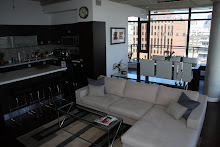
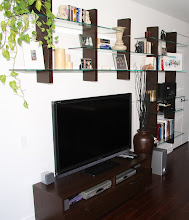
Shown here is a large sectional sofa which has both a pull out bed and hidden storage compartment. Many fabrics and configurations are available for this piece. Below is a headboard with mirrors which also include cabinets with glass shelbes and recessed halogen lighting.
The perfect hiding place for all of your valuables!
Friday, May 23, 2008

Friday, May 16, 2008
Design Green - A Call To Action
Learn about the Eco Design industry in Toronto and receive a complimentary tour of the Sustainable Condo Exhibit on May 28th 2008. The event will be held downtown at the Toronto Exibition Place Eco Pod.
Design Green: A Call to Action
Green Fashions, Panel Discussion and Sustainable Condo Tour
Wednesday, May 28th, 6:00 PM to 9:00 PM
Eco Pods, Exhibition Place
Design Green: A Call to Action
Green Fashions, Panel Discussion and Sustainable Condo Tour
Wednesday, May 28th, 6:00 PM to 9:00 PM
Eco Pods, Exhibition Place
Thursday, May 8, 2008
Inspired by Small Spaces
The Merchandise building is a loft conversion
of a historic warehouse once owned
by Simpsons department store and later
Sears Canada. Constructed between
1910 - 1949 it is a classic example of
industrial architecture and is one of
Toronto’s largest condominium projects.
Living in one suite within this conversion,
our client’s expressed specific concerns.
Having a completely open concept living
and sleeping area, they hoped to create
partitions between rooms without
constructing actual walls. Inspired by their
Japanese heritage, our solution was to
build light Sohji screen doors made of
wood and glass. These doors provided
the visual and auditory privacy they
required.
Another dilemma was the lack of storage
in the unit. For this an integrated headboard,
shelving and closet units were
designed for the bedroom. Within this
piece we were also able to house
recessed halogen lighting thus eliminating
the need for night table lamps.
Condos within retrofit buildings are great!
They often showcase original architectural
elements and add to the visual
landscape of our city however they also
present unique design dilemmas. Our
designers are trained to help you
overcome your dilemmas and create a
harmonious living environment.
of a historic warehouse once owned
by Simpsons department store and later
Sears Canada. Constructed between
1910 - 1949 it is a classic example of
industrial architecture and is one of
Toronto’s largest condominium projects.
Living in one suite within this conversion,
our client’s expressed specific concerns.
Having a completely open concept living
and sleeping area, they hoped to create
partitions between rooms without
constructing actual walls. Inspired by their
Japanese heritage, our solution was to
build light Sohji screen doors made of
wood and glass. These doors provided
the visual and auditory privacy they
required.
Another dilemma was the lack of storage
in the unit. For this an integrated headboard,
shelving and closet units were
designed for the bedroom. Within this
piece we were also able to house
recessed halogen lighting thus eliminating
the need for night table lamps.
Condos within retrofit buildings are great!
They often showcase original architectural
elements and add to the visual
landscape of our city however they also
present unique design dilemmas. Our
designers are trained to help you
overcome your dilemmas and create a
harmonious living environment.
Thursday, May 1, 2008
Eco Friendly Culture on King St East
Joanna Kakkavas, principal of Roomy Home, has always believed in supporting local artists and manufacturers. “When bying locally, we are not only supporting the local economy but also reducing transportation emissions produced during shipping. This begins with where the materials are sourced, such as wood for the frames and fabrics for the upholstery and then moves on to where the manufacturers are located.”
Recognizing the evolution in social awareness concerning “Eco Living” Roomy Home initiated their first green furniture collection in 2007 at the Toronto Interior Design Show.
Ms Kakkavas, together with Corinne La Flamme, senior designer for Roomy, launched
The Living Breathing City, which sought to touch its guests on a variety of levels. The furniture was all made from renewable and recycled resources. The materials used were bamboo, natural latex foam, natural fibres and recycled polyesters. Even the flooring reflected the theme as it was made of recycled rubber from car tires.
The show was a success and Roomy was then approached by one of Toronto’s top developers, Tridel to contribute custom furniture pieces to their new project, The Eco Suite.
This year, the duo were responsible for the re-design of the Sustainable Condo.
“Our role here was to determine how to make the existing exhibit more functional and stylish without loosing focus on it’s intent, to show condo dwellers how to use sustainable materials in their homes while integrating space saving solutions.” says La Flamme.
They did just that. A new bedroom was designed integrating a queen storage bed and luxurious upholstered headboard. A new media unit and desk were built around a state of the art flip screen T.V. The woods used were both local and low VOC emitting while the fabrics were natural and organic. They brought the functionality which they are so well known for and combined it with eco friendly materials.
Both Kakkavas and La Flamme agree that these projects are just the tip of the iceburg.
They both feel that while people have always come into their retail location looking for well constructed furniture, more and more are asking specifically for Canadian Made pieces. Many more are now also asking specifically about the materials used and how they can make their pieces even “greener”. It’s clear to see that Roomy Home Interiors would like to help their clients lessen their carbon footprint by simplifying the process of purchasing products that are both stylish and less harmful to the environment.
To learn more about the Eco Suite visit www.usinglessenjoyingmore.com
CB
Subscribe to:
Posts (Atom)